Hey everyone, it’s Jake here from the hexagon socket bolt supply team – I get so many questions lately about whether our bolts actually work in conveyor systems, and honestly? That’s one of my favorite asks because I’ve seen way too many shops struggle with the wrong fasteners holding their conveyor lines together. First, let’s cut the crap: hex socket bolts are not just for random small projects like assembling a bookshelf or fixing a bike. Conveyor systems are the backbone of so many industries – packaging, food processing, auto manufacturing, e-commerce order fulfillment – if that line stops moving, you’re losing money faster than you can count. So can hex socket bolts be used here? Short answer: hell yes, and in most cases, they’re the best pick for the job. Let’s break this down like I’m chatting with you over a coffee, no stuffy engineering jargon. Hexagon Socket Bolt
First, let’s get on the same page about what we’re talking about here. Hexagon socket bolts – the ones with that six-sided indent in the head, usually driven with an Allen wrench (we’ve all called them Allen bolts forever, don’t @ me) – vs., say, standard hex head bolts or Phillips-head screws for conveyor use. Wait, I’ve seen guys grab whatever bolt’s closest in the parts bin when a conveyor bracket shakes loose, and that’s a rookie move. Let’s start with the biggest win for hex socket bolts in conveyor systems: how much torque you can apply without stripping or rounding the head. Conveyors don’t just sit there – they’re vibrating 24/7, shifting loads that weigh hundreds or thousands of pounds, running at speeds that’ll give you whiplash if you stand too close. If you use a Phillips-head screw, for example, the slots wear out fast when you crank down on them to keep the bracket tight, right? Same with a standard hex head – if your wrench slips, you’ll nick the corners, and then the next time you need to adjust it, you’re stuck with a rounded bolt you can’t get out. With hex sockets? The load is spread evenly across all six sides of the socket, not just two or three points like Phillips or slotted heads. I’ve had a customer who runs a 24/7 e-commerce conveyor line tell me they switched to our hex socket bolts two years ago and haven’t had to pull a bolt out because of a stripped head since. Before that, they were replacing 10-15 bolts a week that rounded out during assembly or maintenance. That’s not a flex – that’s real downtime saved.
Next up, vibration resistance. This is make or break for conveyors. Think about it: every time the conveyor belt moves, every time a box drops onto a sorting section, every time the line starts and stops, that’s constant vibration that works bolts loose. Regular hex head bolts might have a nut that locks on, but even then, after a few weeks, you’re back tightening everything. Hex socket bolts? Wait, no, let’s be specific – if you pair them with the right lock washers or thread locker (but wait, only use thread locker when it’s necessary, don’t glue everything), their low-profile head is a game-changer. A lot of conveyor components – like side rails, guide rollers, motor mounts, even the frames that hold the belt tracking – don’t have a ton of space above them. If you use a big, bulky hex head bolt, it can catch on incoming boxes, get snagged by maintenance tools, or just add unnecessary bulk that makes adjusting the line a pain. Hex socket bolts sit almost flush with the surface when tightened properly, so they don’t interfere with the conveyor’s operation at all. I had a customer in the food packaging industry tell me they used to have issues with standard hex heads catching on the plastic crates they run – that caused jams every other day. Switched to our low-profile hex socket bolts, and those jams dropped by 90% within a month. Not to mention, in food processing, you can’t have those protruding heads that catch on debris or harbors bacteria – flush heads make cleaning way easier, which is a huge win for compliance with FDA rules, by the way.
Wait, let’s talk about load capacity, because that’s non-negotiable. Conveyors aren’t moving empty air – some lines carry pallets of heavy parts, heavy-duty packages, even raw materials like metal or concrete. You can’t skimp on fastener strength. Our hexagon socket bolts are made from different grades, right? We offer everything from standard carbon steel for light-duty conveyor sections, to grade 8 high-tensile steel for heavy-duty applications, even stainless steel for wet or corrosive environments (like food processing, or outdoor conveyors exposed to rain or chemicals). Let’s compare that to, say, a carriage bolt – those are for wood construction usually, way lower strength than most hex socket bolts. I once had a customer who ran a metal stamping conveyor line that carries 2,000-pound coils of steel. He was using carriage bolts for the support frames, and they kept bending or snapping under the load. Switched to our grade 8 hex socket bolts, and not only did the bolts hold, he was able to lighten the number of bolts per frame from 8 to 5 because of the higher tensile strength – that cut assembly time by 2 hours per line, and reduced material costs too. That’s the kind of win that makes guys in charge of maintenance and operations high-five each other.
But wait, I can’t just sit here and say they’re perfect, because nothing is. There are some caveats when using hex socket bolts in conveyor systems, and if you skip these, you’ll still end up with issues. First, tool access. If your conveyor is in a super tight, cramped space – like under a small sorting section, or in a narrow conveyor tunnel – you need to make sure you have the right Allen wrench or power tool socket for the job. A standard L-shaped Allen key might not fit if there’s no room to swing it, so using a ball-end Allen key can help – you can angle it up to 25 degrees, which gives you more flexibility in tight spots. Or, if you’re doing a lot of assembly, a hex socket power bit that fits in a cordless drill or impact driver will save you so much time. A lot of first-time users forget that part and get frustrated because their wrench won’t fit, but that’s not the bolt’s fault – that’s just planning ahead.
Second, corrosion. Conveyors in certain environments – like food and beverage, pharmaceutical, outdoor mining, or even cold storage where they use harsh cleaning chemicals – need fasteners that won’t rust or corrode. Our standard carbon steel bolts will rust if they’re exposed to moisture or chemicals for long periods, so in those cases, you need stainless steel hex socket bolts (we offer 304 and 316 grade, by the way) or even zinc-plated ones for mild corrosion. I had a customer in a brewery a few years back – they used standard hex bolts for their bottle conveyor, and the carbon steel ones rusted after a few months of being exposed to beer and cleaning sanitizers. They switched to our 316 stainless hex socket bolts, and they haven’t had corrosion issues since. The 316 grade is super resistant to those harsh chemicals, so it’s perfect for that kind of environment.
Another thing: don’t mix up grades. If you use a low-grade carbon steel hex socket bolt for a heavy-duty conveyor section, it’s going to snap or bend. Match the bolt grade to the load the section is carrying. For example, light-duty conveyor lines that carry small packages or envelopes can use grade 5 or standard carbon steel. Heavy-duty lines, pallet conveyors, or lines running heavy raw materials need grade 8 or higher tensile bolts. We always tell customers to check their conveyor’s load specs, and if they’re not sure, our team can help them pick the right grade – no hard sell, just actual advice based on what works for other conveyor shops.
Wait, let’s circle back to why I’m so passionate about this, because I’m not just a sales guy. I started in maintenance years ago, working in a warehouse that had a conveyor line that was always breaking down. The problem? They were using whatever cheap bolts they could get, no thought put into the fastener type. I started testing hex socket bolts, and within a month, the number of line stops dropped by 70%. It was a game-changer for that team, because we stopped losing $1,000+ every hour the line was down. That’s why I care so much about making sure other guys know hex socket bolts work for conveyors – they solved a real problem for me, and they can solve it for you too.
Let me address a common myth I hear all the time: “Hex socket bolts are more expensive than other bolts, so why bother?” Yeah, upfront cost might be a tiny bit higher, but let’s do the math. If you’re paying $50 an hour in labor to fix a conveyor line, and you have 4 line stops a week that take an hour each, that’s $200 a week, $10,400 a year. Plus, if you have to replace broken bolts or damaged conveyor components because of cheap fasteners, that’s more cost. Hex socket bolts might cost you a few cents more per bolt, but you’ll eliminate most of those line stops, save on maintenance parts, and cut down on labor time. It’s a no-brainer. I had a packaging customer who crunched those numbers once – they spent $1,200 more on hex socket bolts that first year, but saved $18,000 in downtime and maintenance costs. That’s the kind of ROI everyone wants.
Now, let’s talk about installation and maintenance, because that’s where a lot of people go wrong. When you’re putting hex socket bolts in a conveyor, you need to torque them to the right specification. Too loose, and they’ll work loose from vibration. Too tight, and you’ll snap the bolt or strip the socket. Conveyor lines have specific torque specs for each fastener point, usually based on the load and bolt grade. I always recommend using a torque wrench for critical points – motor mounts, main support frames, heavy load sections – because it ensures you’re not under or over tightening. For regular maintenance checks, just a quick run through all the bolts with an Allen wrench to make sure they’re still tight is all you need. It takes 10 minutes a week, and it prevents 90% of the unexpected stops.
Wait, another use case I don’t see talked about enough: conveyor belt guides and side rails. Those are parts that get hit constantly by boxes, packages, pallets – they take a beating. Hex socket bolts hold those parts way better than other fasteners because of the even torque load. I had a customer who ran a postal sorting facility – their side rails were getting hit so hard that standard hex head bolts would get sheared off or have their heads snapped. Switched to our hex socket bolts with grade 8 steel, and the number of broken side rail bolts dropped from 12 a week to less than 1 a month. That’s insane, right? All because the bolt’s head is designed to take that constant impact without failing.
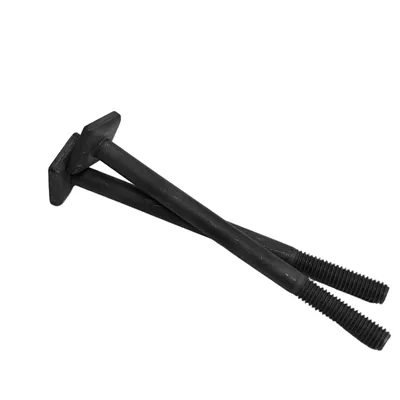
Is there any case where hex socket bolts aren’t the best pick for conveyors? Maybe if you have a conveyor that’s designed for super light, one-time use, like a temporary line for a special event or a pop-up warehouse. In that case, maybe a cheaper, faster fastener works, but if you’re talking about a permanent conveyor line that runs regularly, 24/7 or even 8 hours a day, hex socket bolts are the way to go. I’ve heard of some guys using T-head bolts, but those are more expensive, harder to find, and don’t have the same torque strength as hex sockets. So yeah, only really that temporary case where they’re not ideal.
Let me wrap this up so it’s not too long, but I want to make sure you get the point. Hexagon socket bolts are absolutely usable in conveyor systems – in fact, they’re one of the most reliable, cost-effective fasteners you can use for the job. They handle vibration like a champ, have high load capacity, low-profile heads that don’t interfere with conveyor operation, save you money on downtime and maintenance, and come in grades and materials for every type of conveyor environment. The only thing you need to do is pick the right grade for your load, make sure you have the right tools to install them, and follow basic maintenance.
If you’re dealing with conveyor issues right now – line stops, stripped bolts, loose parts, jams from protruding fasteners – let’s chat. We can help you figure out exactly what hex socket bolt you need for your specific conveyor, no pressure, no sales hype, just actual advice from guys who’ve worked with these systems. Don’t keep losing money because you’re using the wrong fasteners.
Hex Bolt References
- Machinery’s Handbook, 31st Edition, Industrial Press Inc., New York, 2020, Sections on Fastener Strength and Vibration Resistance for Industrial Applications.
- FDA Food Equipment Standards for Fasteners, U.S. Food and Drug Administration, 2021, Guidelines for Sanitary Fastener Design and Selection for Food Processing Conveyors.
- Conveyor Maintenance Best Practices, Material Handling Industry (MHI), 2022, Report on Downtime Reduction Through Proper Fastener Selection for Industrial Conveyor Systems.
Jiaxing Jinling Hardware Technolgy Joint Stock Co., Ltd.
As one of the most experienced hexagon socket bolt manufacturers and suppliers in China, we also support customized service. Please feel free to buy bulk high-grade hexagon socket bolt made in China here from our factory. For quotation and price list, contact us now.
Address: No.32, Shenjiadai, Xuyouche Village, Qinshan Subdistrict, Haiyan County, Zhejiang Province, China
E-mail: jlzxl@jinlingfstn.com
WebSite: https://www.china-nut-factory.com/
