If you’ve ever stood next to a fuel tank trailer at a truck stop and wondered what all those random metal bits, knobs, and hoses are for—you’re not alone. When I started in the fuel trailer supply game, I’d stare at these components too, thinking they were just weird add-ons to hold the big tanks. Now, after selling and servicing these trailers for years, I know every part isn’t just a decoration. Each accessory is there to make sure you don’t spill fuel, avoid spills that cost thousands in fines, keep your driver safe, and make loading/unloading as smooth as possible. Fuel Tank Trailer

This post is for owner-operators, fleet managers, and anyone who buys or rents these trailers. No fancy jargon, just real talk about what you actually need on your average fuel tank trailer. Let’s jump in.
First up—let’s start with the stuff that keeps you compliant. This is non-negotiable, no cutting corners here. The last thing you want is a DOT inspector pulling you over and writing a $1,000 ticket because you skipped a basic accessory.
One of the big ones is the vapor recovery system. If you’ve ever smelled raw fuel at a gas station, that’s vapor escaping into the air. That’s not just stinky—it’s bad for the environment, and also illegal. A vapor recovery system hooks into the tank’s top and connects to a matching nozzle at the loading rack. When you pump fuel into the trailer, it sucks those fumes right back out of the tank, so they don’t float away. We see a lot of new operators skip this at first until they get that first environmental fine. It’s not super expensive, and it saves you way more in the long run.
Next, emergency shut-off valves. These are non-negotiable. Picture this: you’re loading fuel, and a hose slips, spilling gallons all over the ground. If you don’t have a quick way to cut the flow, that spill keeps happening until someone runs to turn off the pump. Emergency shut-offs (both at the loading end on the trailer and at the pump end) let you kill the flow in 2 seconds flat. Most new trailers come with them, but if you’re buying used, double-check. I’ve seen trailers with faulty shut-offs that almost got their drivers fired.
Another compliance thing: grounding straps. When you move fuel through a hose or a pipe, static electricity builds up. One spark from that static? And you’ve got a tiny bomb on wheels. Grounding straps connect the trailer to the ground (via the truck or the loading pad) so that static dissipates before it can cause a fire. No fancy tech here, just a thick metal strap that’s checked every pre-trip. I always tell drivers to tap the strap with their foot before hooking up—if it moves, it’s loose, fix it.
Now, let’s talk about the stuff that makes actually moving and handling the trailer easier, not just legal.
Loading and unloading hoses are not one-size-fits-all. You can’t use a garden hose for fuel, that’s obvious, but not all fuel hoses are the same. There’s the big main hose for pumping fuel in/out, and smaller ones for things like vapor recovery or measuring the tank level. Cheap hoses crack in cold weather, or get corroded if you’re moving diesel all the time. We sell hoses reinforced with wire that last twice as long as the budget ones, and they don’t kink when you’re working in tight loading yards. Pro tip: keep a spare hose clamp and a small section of hose in your truck cab. Last winter, a driver of ours had a hose split on the side of a highway and used that spare to get to the next stop without calling a tow.
Then there’s the tank level gauge. You need to know how much fuel you’ve got, right? Old trailers used to have those stick gauges that you lower into the tank and hope it’s accurate. Now, most have digital gauges that sit on the outside of the tank. They sync with sensors inside, so you can see exactly how many gallons are in the trailer without climbing up on the tank (that’s a safety win right there). Some even send alerts to your phone if the level gets too high—perfect for when you’re loading and can’t hang around the trailer. We’ve had fleets cut manual level checks by 70% since switching to these, so it’s worth the extra cash.
What about those little metal knobs on the top of the tank? Those are manhole covers, duh, but they’re more important than you think. Fuel tanks need to be sealed tight, but they also need to vent pressure. If you seal it too tight, as you pump fuel out, a vacuum forms inside and the pump stops working. So manhole covers have built-in vent valves that let air in/out, but keep fuel from spilling if the trailer tilts. Some drivers try to skip the vent and open the cover manually—don’t do that. If you don’t have a working vent, you’ll be stuck with a dead pump and a wasted load. I’ve seen a driver on an overnight run in the middle of nowhere, just because he closed the vent and couldn’t pump out his diesel.
Now, safety gear. This is the stuff that’s not required by DOT, but if something goes wrong, it’s the difference between a bad day and a terrible one.
First, fire extinguishers. Not the little kitchen type—you need ABC dry chemical extinguishers that’re rated for flammable liquids. Mount them right next to the driver’s door, so you can grab them in 2 seconds if there’s a small fire from a hose leak. Every trailer we sell comes with a 5-pound extinguisher, and we tell drivers to check the pressure gauge every month. Most people forget this until they need it, and that’s when the gauge is in the red.
Then, spill kits. Even with emergency shut-offs, spills happen. Maybe a hose breaks, or you overfill a tiny bit. A standard spill kit has absorbent pads, gloves, and a small bucket to collect the fuel-soaked pads. We keep a kit in every trailer’s toolbox, and I always remind drivers to use it—don’t just hose fuel down the drain, that’s a huge fine. A spill kit costs like $50, and avoiding a $10,000 EPA fine makes it a no-brainer.
Personal protective equipment (PPE) too. Gloves, non-slip shoes, safety glasses. You’re climbing up on a tank that’s wet with fuel, so non-slip shoes are a must. Gloves keep fuel off your skin, which is good for you (fuel isn’t meant to be absorbed through skin). Safety glasses keep fuel splatters out of your eyes. I had a driver a few years back who skipped glasses when he was pumping gasoline, and a small splash got in his eye—cost him a week of work and a trip to the doctor. Don’t be that guy.
Wait, what about other random stuff? Like the reflectors and marker lights. That’s basic road safety, but you’d be surprised how many used trailers have broken reflectors. At night, if a state trooper can’t see your trailer, you might get a ticket. We replace all old reflectors and LED lights on every new trailer we sell, because it’s the little stuff that keeps you on the road.
Oh, and the breakaway cable for the trailer brakes. If the trailer gets disconnected from the truck, the breakaway cable pulls a lever that applies the trailer brakes automatically. That’s not just a safety thing—it’s a huge liability if you trailer rolls away into a parking lot. We test this cable every time a trailer leaves our yard, and we tell operators to check it every pre-trip. If it’s frayed, replace it. I’ve seen a trailer with a broken cable roll into a ditch, totaled the whole thing. Not a cheap mistake.
Let me be real here—when you’re running a fuel trailer, you’re always looking for ways to cut costs. But skimping on accessories is one of the worst moves you can make. A $100 vapor recovery part that saves you a $1,000 fine is a no-brainer. A $50 spill kit that avoids a $10,000 EPA bill is even more obvious.
A lot of new operators come to us and ask “what’s the minimum I need to get going?” and I always say—don’t do minimum. Get the basics: emergency shut-offs, grounding straps, fire extinguisher, spill kit, good hoses. The rest you can add as you go, but don’t skip the stuff that keeps you legal and safe.
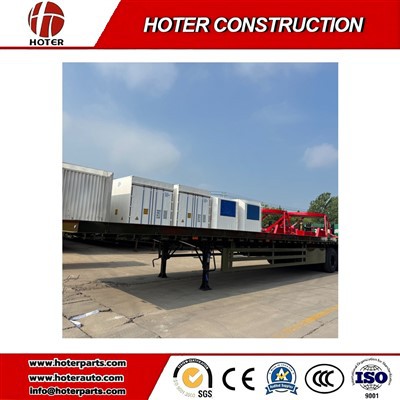
If you’re in the market for a fuel tank trailer, or need to upgrade your current one with these accessories, hit us up. We don’t do fine print or overcharge for parts—just real advice for real drivers who need to keep their trucks moving. Let’s chat, no pressure, just help you figure out what works for your fleet or your rig.
Wheel Rim References:
National Highway Traffic Safety Administration (NHTSA)
Environmental Protection Agency (EPA)
Commercial Vehicle Safety Alliance (CVSA)
American Petroleum Institute (API) Publication 1585
Zhangzhou Hoter Construction Machinery and Parts Co., Ltd.
As one of the most professional fuel tank trailer manufacturers and suppliers in China, we’re featured by quality products and good price. Please rest assured to wholesale high-grade fuel tank trailer for sale here from our factory. Contact us for more details.
Address: No. 3/4-41, Ziwei Road, Longhai, Zhangzhou city, Fujian province, China
E-mail: info@hoterparts.com
WebSite: https://www.hoterparts.com/
