Hey there, fellow engineers, production leads, and anyone who’s ever stared at a pile of wires thinking “wait, is this connection actually gonna hold?” – I’m Alex, and I’ve been geeking out over wire-to-wire connectors for the last 8 years, ever since I started on the supply side of this game. I’ve seen my fair share of mistakes: cheap connectors that melted in a factory line after 2 weeks, ones that popped loose mid-shipment, and even a prototype that died because the pin gaps were just millimeters off. Today, I’m pulling back the curtain on how actually to spot a good wire-to-wire connector – no fancy jargon, no overpriced buzzwords, just real, stuff that you can check right now, especially if you’re picking stock for your next job. Wire-to-Wire Connector

First off, let’s cut to the chase: wire-to-wire connectors aren’t all the same. I know it’s tempting to grab whatever’s cheapest on that bulk supplier list, but trust me, that’s how you end up troubleshooting at 2 a.m. when a batch of products fails QC. The good ones stand up to what they’re supposed to do, period. Let’s start with the basics you can check with your own two hands, no lab gear needed.
Take the housing, for example – that plastic part that holds all the pins. I’ve seen so many connectors where the housing feels cheap, like it’ll snap if you pinch it too hard. A lot of cheap stuff uses generic PVC or low-grade nylon that gets brittle when it’s even a little hot, or cracks if it’s jostled around. The real deal? They use high-grade nylon, like UL94 V-0 rated stuff. What does that mean, for those who don’t geek out over fire ratings? It self-extinguishes if there’s a spark, so if there’s a short, it doesn’t turn the whole connector into a fire starter. How to test this quick? Grab two connectors, squeeze the housing as hard as you can – the good one won’t flex or bend more than a hair. Rub it against a piece of sandpaper a few times; if it leaves black, dusty marks, that’s low-grade plastic. My team only stocks UL-certified housing materials, no exceptions – we’ve had way too many clients come to us after a fire scare from a cheap batch, so we built that into our QC before we even ship anything.
Next, the metal pins inside. This is the part that actually carries the current, so skimping here is like using a straw to move a fire hose. Cheap pins are often thin, or made of pure copper that corrodes super fast, or even worse, just plated copper over steel (I’ve seen that – the steel rusts after a few months, and the connection dies). Good pins are usually brass or copper alloy, and they have a thick plating of tin, gold, or silver – but wait, not just any plating. Plating thickness matters. For most general use, 0.5 microns of tin is fine, but if you’re dealing with outdoor or high-humidity applications, you want at least 1 micron, or a gold plate (even 0.1 micron of gold is way more corrosion-resistant than tin here). How to spot a bad pin? Hold a pin up to the light – cheap ones will have that dull, grayish look, like they were cut from a scrap pile. Good pins have a consistent, smooth sheen, no pitting or rough edges. Also, wiggle the pin in its slot in the housing – if it moves at all, that’s a red flag. A solid pin should be seated tight, no give, so every connection is consistent. I’ve had clients test this by pulling on a pin with a pair of pliers – if it comes out, that connector gets sent back. No exceptions.
Now, the crimp connection – this is where the wire meets the pin, and this is probably the most common place where cheap connectors fail. A lot of budget connectors skip proper crimping design, so when you crimp it to a wire, either the wire strands get cut (so they break under vibration) or the crimp is too loose and the connection gets hot. Good connectors are designed for specific wire gauges – that’s the number on your wire, like 18 AWG, 22 AWG, whatever. The crimp barrel on the connector should match exactly. If you’re using 18 AWG wire, the crimp barrel has to be sized for 18 AWG, not a one-size-fits-all that crushes 20 and is too loose for 18. Another thing: the insulation crimp part. The good ones have two little prongs on the crimp barrel that grab both the wire strands and the insulation, so it’s like a lock. Cheap ones just crimp the metal part, so if you tug on the wire, the insulation slips right out, and suddenly your connection is gone. My team tests every crimp batch by doing a pull test – we yank the wire with a set amount of force, like 10 pounds for 22 AWG, and if it comes out, the whole batch gets scrapped. That’s not overkill, that’s how you make sure a connector doesn’t fail when a customer’s product is shipped.
Wait, let’s talk about mating and unmating – that click sound you hear when you plug two connectors together? That’s not just a cool sound, that’s a signal. A good wire-to-wire connector has a consistent, positive tactile click. It should snap into place, and when you pull gently, it doesn’t come loose. Cheap connectors either have no click at all, so you’re not sure if it’s connected, or the click is really weak, and it pops apart on its own. I’ve seen outdoor LED light sets where the connectors didn’t click, and after a few months of rain and wind, the wires just fell apart, leaving customers with dead lights. How to test this? Mating and unmating it 10, 20, even 50 times. If it gets floppy after 10 uses, that’s low-quality. Good connectors are designed to last hundreds of mating cycles without losing that click or the tight connection. That’s a big one for things that get taken apart and put back, like consumer electronics or automotive accessories.
Oh, and don’t forget about environmental ratings! This is super important if you’re using them outside, in industrial settings, anywhere with dust, water, extreme temps. A lot of cheap connectors don’t say anything about IP ratings, which is the standard for water and dust resistance. If you need a connector that can handle being splashed with water, look for IP65 or higher – that means it’s dust-tight and can handle low-pressure water jets. If it’s for something in Alaska or Arizona, look for a temp rating – like -40°C to 125°C. I’ve had a client come to me with a batch of connectors that froze solid in a outdoor kiosk in Canada, just because they grabbed ones rated for room temp. The good ones will list that on the specs, no fine print. If a seller won’t give you the environmental ratings, or the number’s faded, walk away. It’s not worth it.
Wait, what about certification? I can’t stress this enough. Look for UL, CSA, or CE marks. Those aren’t just stickers – they mean the connector passed safety tests for things like current carrying capacity, fire resistance, and durability. I’ve seen so many no-name connectors that claim to be UL-listed, but when you check the actual UL database, they’re not. That’s a scam. For example, if a connector is rated for 5 amps, that means it can carry 5 amps without overheating. A cheap uncertified one might be rated for 5 amps, but in reality, it overheats after 3, which melts the wire and causes a fire. My entire line of wire-to-wire connectors is UL-certified, and we can provide the full certification paperwork any time a client asks for it. No hoops, no tricks.
Let me also tell you about the mistakes I’ve seen clients make, to give you a real-world example. A couple years back, a small electronics startup came to us, panicking. They’d ordered 10,000 cheap wire-to-wire connectors from a bulk site, and when they tested them, 20% didn’t fit their 22 AWG wire right – the crimp was too loose, so when they vibrated the prototype, the connections failed. They thought wire gauges were standard, but the cheap ones used a lousy crimp barrel that was off by a few millimeters. We sent them a sample of our standard 22 AWG wire-to-wire connectors, they tested it, and the pull test came out perfect. That’s the kind of thing that comes from using a supplier who actually designs their connectors for real use cases, not just cutting corners on material costs.
Another example: last year, an industrial client came to us after a line of their sensors failed. They were using unrated connectors in a factory with tons of dust, and the dust got into the pins and caused corrosion, so the sensors stopped working. We recommended our IP67-rated wire-to-wire connectors, which are sealed so dust can’t get in, and since we switched, their failure rate dropped to almost zero. That’s exactly what good connectors do – they solve the problem you’re buying them for, not create a new one.
Now, let’s wrap this up with the practical stuff you can do when evaluating a batch of connectors, without sending them off to a lab. First, do the visual check: is the housing plastic consistent in color, no bubbles or rough spots? Are the pins smooth, no pitting or burrs? Second, do the hands-on test: squeeze the housing, tug the pins, crimp a sample to a piece of wire (use your exact wire gauge, by the way – don’t use a spare), and pull the wire to make sure it doesn’t slip. Third, do the mating test: click it together 20 times, listen for that consistent click, make sure it doesn’t come loose when you tug it. Fourth, check for certification and specs: ask for UL/CE marks, IP ratings, temperature ranges, and confirm they match what you need.
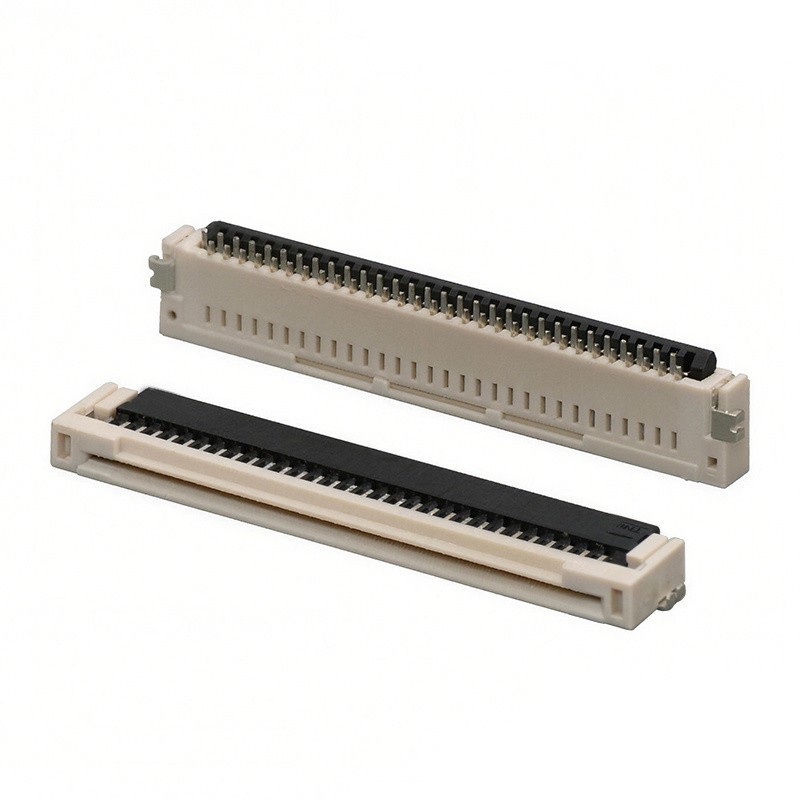
If you’re someone who’s in the market for reliable wire-to-wire connectors – whether you’re a small indie builder, a production manager for a big brand, or anything in between – don’t settle for the cheapest option. The extra few cents per connector is nothing compared to the cost of recalls, troubleshooting, or frustrated customers. We’ve built our business on making connectors that actually work, and we’re happy to send you free samples so you can test them yourself, no strings attached. Just reach out to us to start the conversation about your specific needs, whether you need a small batch for a prototype, or a large run for full production.
FPC Connector At the end of the day, a good wire-to-wire connector is one that does its job without you having to think about it. It doesn’t melt, it doesn’t come loose, it doesn’t corrode, and it works when you need it to. Skip the cheap knockoffs, follow these steps, and you’ll save yourself a ton of headaches down the line.
References
- Underwriters Laboratories Inc. (2022). Standard for Safety for Connect Devices, Circuits, and Systems. UL 60950-1.
- International Electrotechnical Commission. (2021). Connectors for electronic equipment – Part 2-1: Detail specification for rectangular connectors, type of printed board mounting, for high frequencies. IEC 60603-2.
- Deutsches Institut für Normung. (2020). Environmental conditions and testing for electrical and electronic equipment – Part 2: Tests – Test Tb: Vibration, sinusoidal. DIN EN 60068-2-6.
- Society of Automotive Engineers. (2023). Wire-to-Wire Connectors for Low-Voltage Automotive Applications. SAE J1212.
Wenzhou JKUN Connector Co., Ltd.
As one of the most professional wire-to-wire connector manufacturers and suppliers in China, we’re featured by quality products and low price. Please rest assured to wholesale bulk customized wire-to-wire connector from our factory. For quotation and free sample, contact us now.
Address: No.2667, Ningkang East Road, Yueqing City, Zhejiang Province, China
E-mail: sales@cnjkun.com
WebSite: https://www.jkunjcj.com/
