Hey everyone, thanks for stopping by. If you’re in the market for iron castings—whether you’re a construction equipment builder, an auto parts maker, or someone who’s got to source metal parts that hold up under pressure—you know the drill. You get those castings, machine them to tight tolerances, and then… wait. Suddenly, you’re dealing with wear way faster than you planned. Bearings get scored, gear teeth chew up, hydraulic components leak because the surface’s not tough enough. Ugh, it’s such a headache. As an iron casting machining supplier, this is the stuff we deal with every single day, and let me tell you—we’ve tested so many methods over the years that worked and some that totally flopped. Today, I’m spilling the real, no-fluff tips on how to make your machined iron castings way more wear-resistant. No fancy jargon, no half-baked hacks that sound good in theory but die in practice. Let’s dive in. Iron Casting Machining
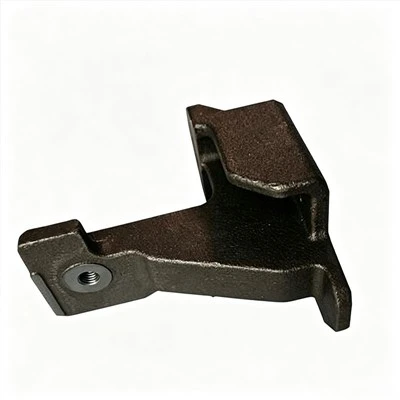
First off, let’s get one thing straight: wear resistance isn’t a one-size-fits-all fix. The iron type you’re working with matters a lot. Gray iron, ductile iron, malleable iron—each behaves totally different when you’re machining it and when you’re trying to harden it up. For example, gray iron has graphite flakes that actually help with lubrication, but they also create tiny weak spots where wear starts first. Ductile iron, on the other hand, has those spherical graphite nodules, so it’s way tougher to begin with, but its machined surface can still feel too soft for high-wear jobs like farm equipment plows or forklift forks. So before you even think about post-machining fixes, you’ve got to make sure the base casting is right. We always chat with our customers about their end use first—if they’re making parts for a logging truck that’s dragging through mud and rocks, ductile iron’s non-negotiable, no sense wasting time on gray iron that’ll crack before it wears out. That’s step one, and it’s the easiest one to mess up if you skip it.
Now, let’s talk about the stuff you do after machining, because that’s where most people drop the ball. A lot of folks think machining is the final step, but it’s actually the start of the work to boost wear resistance. When you machine iron, you’re left with a surface that’s got all sorts of little stresses and even tiny micro-cracks—stuff you can’t see with the naked eye, but it’s where wear takes hold. So post-machining treatments? Those are game-changers.
Let’s start with the most common one: surface hardening, but not the basic kind that everyone talks about. Flame hardening is super popular for parts like gears and shafts, right? You heat the surface of the machined casting real fast with an oxy-fuel torch, then quench it with water or polymer. The catch here is, if you do it wrong, you warp the part—totally ruins that tight tolerance you just spent hours machining. We’ve learned over the years to adjust the flame size and quenching time based on the part’s thickness. For thinner castings, we use a slower quench with a polymer solution instead of straight water, because it’s less aggressive and keeps the tolerance spot-on. For thicker stuff, we crank up the heat a little higher and shorten the quench time, so the surface gets hard without the inner core getting brittle. Another thing we do: after flame hardening, we do a light grind to touch up any tiny warps. It’s an extra step, but it beats sending back warped parts because the tolerances are off.
Then there’s induction hardening. This is way more precise than flame hardening, because you only heat the exact area you need—no wasting heat on the whole part, no overheating surrounding areas. It’s perfect for parts like crankshaft journals or cam lobes, where only the outer surface touches other metal. Here’s the pro tip we picked up: don’t harden the entire machined surface if you don’t have to. If you’ve got a shaft that only wears at the ends, induction harden just those ends. Saves time, saves energy, and the inner part of the shaft stays tough enough to handle torque, so it won’t snap later. We’ve had customers switch from flame to induction hardening and cut their part failure rates by almost 30%—that’s huge for their bottom line.
Now, what if you don’t want to mess with heat treatments because they might warp small, complex parts? There’s nitriding. Wait, no—not plain nitriding, because that can make machined surfaces brittle if done wrong. We use plasma nitriding, and let me tell you, it’s a game-changer for small iron castings. You put the machined part in a vacuum chamber, blast it with nitrogen plasma at low temperatures—way lower than other nitriding methods. The nitrogen seeps into the surface and forms super hard nitrides, so the surface gets tough without warping. And the best part? The surface finish stays almost exactly what it was after machining, so you don’t have to grind it afterward. That’s a massive time saver, especially for parts with lots of tight features, like valve bodies or small gears. We’ve used plasma nitriding for a customer making small hydraulic valves for construction, and their valves now last twice as long as the ones they were getting with just flame hardening.
Wait, what about coatings? A lot of people think coatings are just a nice add-on, but they’re actually a necessary step for some high-wear jobs. Thermal spraying is our go-to here. We spray stuff like tungsten carbide or chrome on the machined surface—those are way harder than iron, so they resist scratching and abrasion like crazy. The key is prepping the surface before spraying, though. If you just spray bare machined iron, the coating’ll peel off in no time. We sandblast the machined surface first to create tiny rough pits, and then do a little etch to clean it up. That way, the coating bonds like glue. We had a customer making auger flights for farm tillers—those things get beaten up by rocks and dirt nonstop. They were using plain ductile iron with flame hardening, and the flights wore out in 6 months. We thermal sprayed them with tungsten carbide, and they’ve been getting 2 years out of the same flights. That’s not a upgrade, that’s a game-changer.
But hold up—there’s a trap a lot of people fall into: over-treating the surface. I’ve seen customers ask for “the hardest possible coating” on every part, even when it’s not needed. That’s a waste of money. For example, a small bracket that just holds a panel doesn’t need a tungsten carbide coating—it’d be overkill. A light passivation treatment would be enough to prevent rust and add a little wear, and it’s way cheaper. The same goes for heat treatments: don’t harden a part that only has mild contact. The inner core gets brittle, and you might get a part that cracks under load instead of wearing out. We always ask our customers to share their part’s duty cycle—how much pressure, how much friction, what kind of environment it’s in—before we suggest a treatment. That way, we’re not selling them something they don’t need, and they’re not wasting cash.
Another thing most people don’t think about: machining itself can affect wear resistance. Wait, what? Yeah—when you machine the casting, the tool pressure and the cutting speed change the surface layer. If you use a dull tool, you’re not just leaving bad surface finish—you’re creating a work-hardened layer that’s uneven, which can lead to more wear. Or if you machine too fast, you generate heat that makes the surface soft. We’ve got our machining parameters dialed in so that after we cut the part, the surface is consistent, no weird soft spots or hard spots. That’s half the battle right there. We also do a light surface brushing after machining to remove any tiny burrs or micro-cracks left by the cutting tool. It’s a 5-minute step, but it prevents those micro-cracks from turning into wear points later.
Let’s talk about real-life examples, because that’s what matters. Last quarter, we had a customer who made loader buckets for construction sites. They were using gray iron castings, machining the cutting edges, and then flame hardening. The edges were wearing out in 3 months, and they were replacing bucket edges every other month. We switched them to ductile iron castings, did plasma nitriding on the machined cutting edges, and a light thermal spray of chromium carbide on the top surface that hits dirt. Now their edges last 10 months. They told us that cut their part costs by 40% and reduced downtime for bucket swaps by like 60%. That’s the stuff we care about—results, not just pretty processes.
Wait, what about when parts are exposed to moisture or chemicals? Because wear isn’t just abrasion—it’s also corrosion-wear, where rust eats away at the surface and makes it softer, so it wears faster. For those jobs, we combine wear treatments with corrosion treatments. Like, after induction hardening, we do a phosphate coating that seals the surface and prevents rust. Or after plasma nitriding, we do a light oil impregnation—since iron castings are porous, the oil seeps into the tiny pores and creates a barrier against moisture. That’s another thing people sleep on: porosity in iron castings. If you don’t seal the pores, corrosion can get in from the inside, not just the surface. Oil impregnation is cheap, takes like an hour, and fixes that problem.
Now, let’s be real—there’s no perfect method for every part. Some small, high-precision parts can’t handle heat treatments because they warp even a little. For those, we use cryogenic treatment. Wait, I know that sounds like some science fiction stuff, but it’s not. You put the machined part in a super cold chamber (like -300°F) for 24 hours, then let it warm up slow. It changes the crystalline structure of the iron, makes the surface way harder, and doesn’t warp at all. We’ve used this for small gears for power tools—they get super tiny, and even a 0.001 inch warp is too much for their fit. Cryo treatment doesn’t warp them, and their wear resistance goes up by almost 40%. It’s a bit more expensive than some other methods, but for parts where tolerance is non-negotiable, it’s the only way to go.
The biggest mistake I see customers make? Waiting until they’re already having wear problems to fix it. You shouldn’t just pick a treatment after your part is failing—you should talk to your machining and casting supplier early on, when you’re designing the part. Like, if you tell us you need a part that’ll last 5 years in a muddy environment, we can adjust the casting recipe (maybe add a little nickel to the iron to make it more heat-resistant) and suggest the right post-machining treatment before you even make the first prototype. That saves so much time and money down the line.
So let’s wrap this up, the short version: 1) Pick the right base iron casting for your part’s job—don’t use gray iron for high-torque parts, don’t use soft ductile iron for super-abrasive jobs. 2) Nail your machining process—sharp tools, the right speed/feed, light post-machining brushing to avoid micro-cracks. 3) Match your post-machining treatment to the duty: induction hardening for shafts, plasma nitriding for small complex parts, thermal spray for super high-wear, cryo for tiny tolerance parts. 4) Don’t over-treat—only use what you need, saves cash and prevents brittleness. 5) Add corrosion protection if your part sees moisture or chemicals.
If you’re tired of replacing iron castings way too early, if you’re dealing with consistent wear issues on machined parts, or if you just want to chat about what’s the best fix for your specific application, hit us up. As an iron casting machining supplier, we don’t do one-size-fits-all. We look at your part, your job, your budget, and build a custom plan that actually works. No fluff, no upselling, just real solutions that make your parts last longer. Thanks for reading, and feel free to reach out anytime.
Casting Part Machining References:
- Budinski, K. G. (2012). Surface Engineering for Wear Resistance. Prentice Hall.
- ASM International. (2005). Iron Castings Handbook. ASM International.
- Diniz, A. E., Marcondes, F. C., & Coelho, R. T. (2006). The influence of cutting edge preparation and tool wear on the surface integrity when turning AISI 4340 steel. Journal of Materials Processing Technology, 179(1-3), 263-270.
- Tobe, T., & Inoue, K. (2002). Plasma nitriding of ferrous materials for improved wear resistance. Surface and Coatings Technology, 158-159, 509-514.
- Starling, S. E., & Subramanian, C. (2000). Thermal spray coatings for wear and corrosion resistance. ASM International.
Ningbo Yirui Machinery Manufacturing Co., Ltd.
As one of the most professional iron casting machining manufacturers and suppliers in China, we’re featured by quality products and good price. Please rest assured to wholesale durable iron casting machining made in China here from our factory. Customized orders are welcome.
Address: No.107, Wanzhong Village, Jishigang Town, Haishu District, Ningbo City
E-mail: James.he@yiruitek.com
WebSite: https://www.yiruime.com/
