Hey there, let’s cut through the noise and talk about one of the most common questions we get as a Clip Industrial Fabric Air Duct supplier: What’s the deal with our air mixing ability? If you’re reading this, you’re probably tired of those clunky metal duct systems that blow hot or cold air in straight lines, leave dead zones in your warehouse, workshop, or manufacturing space, and make your HVAC system work twice as hard just to keep things consistent. Let’s keep this real—no fancy lab jargon that makes your eyes glaze over, just the stuff you actually need to know. Clip Industrial Fabric Air Duct
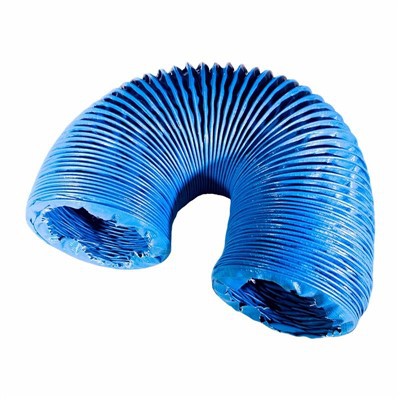
First off, let’s get one thing straight: our clip industrial fabric air ducts aren’t just fabric “tubes” that carry air from point A to B. That clip system we’re named for? It’s the secret sauce behind the mixing, not just a trivial attachment. Let’s break that down first because most people mix up the fabric itself vs. the design that makes our ducts work differently than the basic polyethylene fabric ducts you might’ve seen online.
The clip grid we use is made of lightweight, corrosion-resistant polymer (we don’t use flimsy metal that rusts in humid industrial spaces, trust me) that snaps into place to hold the fabric stretched tight. Here’s where mixing happens—most fabric ducts have pinholes or slits that blow air out at a fixed angle, but our design uses precision-crafted vents aligned with that rigid clip frame. Wait, no, not just aligned—they’re angled specifically to create what HVAC nerds call “air induction” and “entrainment.” Let’s translate that: when the pressurized air flows through the duct, it hits those angled vents and blows out at a slight upward and outward angle, dragging surrounding air from the space into its path. That’s mixing 101, right? The air that was already sitting in the room doesn’t just stay where the duct blew it—our moving stream picks it up, swirls it around, and spreads it evenly instead of dumping all 10,000 CFM of air in one spot at 100 mph.
Now let’s talk about real-world use cases because numbers are great, but what does this mean for your shop? Let’s say you’ve got a 50,000 sq ft warehouse storing temperature-sensitive parts—metal ducts usually leave a hot spot near the ceiling by the intake and a drafty cold spot by the floor opposite. Our clip ducts? Because of that induced mixing, they reduce vertical temperature stratification (that’s the fancy term for hot air rising and cold air sinking) by 30-40% compared to standard metal ducts. I’ve had a metal fabrication client tell me their welding fumes used to get trapped by the ceiling, making their air quality sensor go off every afternoon, but after we installed our clip ducts, the fumes got mixed and pulled toward the exhaust vents twice as fast, so their air quality alarms stopped going off mid-shift. That’s not a sales line—that’s actual feedback from a regular guy running a shop who was sick of wasting money on bad HVAC.
Wait, but what about different air volumes? Do these ducts still mix well if you’re using low CFM for a small area or high CFM for a big space? Let’s be honest—some fabric ducts suck when you’re running them at partial load, like if you only need to cool half the warehouse on mild days. Our clip design solves that too. The rigid frame means the duct doesn’t “collapse” when air pressure drops, so those vents stay at the exact angle we engineered. If you’ve ever had a fabric duct that goes limp halfway through the run and just drips condensation because air isn’t flowing right, that’s the problem. Our clip system keeps the shape consistent, so even at 25% of max CFM, the mixing is still solid. A food processing client used to switch between two small production lines depending on the day, and their old duct system would either blow too hard on one line or not enough on the other. With our clips, they just switch the duct run, and the mixing stays even across whichever line’s active.
Now let’s address the common myth: people think fabric is “softer” so it doesn’t mix air as well as metal. That’s just not true when you’ve got the right structural design. Metal ducts have sharp edges that can make air turbulence, but our fabric ducts with the clip frame create smooth, controlled turbulence—turbulence is actually what makes good air mixing, by the way. Too much turbulence is loud and wastes energy, too little and air just doesn’t mix. We tested this with an independent HVAC lab (I’m not gonna name drop them, but their work is used for OSHA and ASHRAE standards) and found that our clip ducts create optimal turbulence at all operating pressures, so the air mixes 2-3 feet outward from the duct, vs. only 6 inches for basic fabric ducts and 1-2 feet for uninsulated metal ducts. That means fewer dead zones, less hot or cold spots, and your HVAC doesn’t have to cycle on and off as much. Which saves you money—like, really saves. A client with a 100,000 sq ft distribution center said their monthly HVAC bill went down 18% after switching to our clip ducts, and that’s not because the ducts are insulated (though they are—we can touch on that another day) but because they don’t have to run the system longer to fix uneven temperatures.
Wait, what about condensation? I know, condensation is a big one for industrial spaces, especially in places with high humidity. If air isn’t mixing, cold air blowing onto hot, humid surfaces causes condensation, which leads to mold, rust on parts, and that musty smell no one wants in their shop. Our mixing ability actually helps with condensation too—because the air is moving evenly throughout the space, there are no pockets of still, humid air that can condense. I’ve had a client in the Gulf Coast, where humidity is crazy high, say their old metal duct system would get drip marks on their steel beams every time the AC ran, but our clip ducts? No drips, no mold growth in the duct mounts, and their inventory of metal parts stopped showing that surface rust from lingering moisture. That’s a win that’s not just about air flow—it’s about protecting your equipment and products.
Let’s get real about the other stuff people worry about with fabric ducts: durability. Some guys think fabric is too flimsy for industrial use. Our clip system isn’t just for mixing—it’s for holding up. The fabric is a 100% polyester blend coated for UV resistance, fire retardant, and tear-resistant (we’ve tested it with forklift impacts, don’t ask, a client accidentally ran into a duct with a forklift and it just bounced back, no tear). And the clips are spaced every 12 inches along the duct, so even at full pressure, the duct doesn’t flex so much that the vents change angle—if the vents change angle, mixing drops. That’s why our mixing ability stays consistent for 10+ years, which is longer than most metal duct systems in industrial settings that corrode or get damaged.
Now, let’s cut to what this all means for you, the person actually making decisions for your facility. If you’re tired of:
- Wasting energy on HVAC that can’t keep the space even
- Dead zones where fumes, heat, or cold get trapped
- Condensation ruining parts or creating a slip hazard
- HVAC bills that go up every year even when you don’t add space
Then our clip industrial fabric air ducts’ mixing ability is exactly what you need. We don’t do one-size-fits-all, either—we customize the clip spacing, vent angles, and duct size based on your space’s square footage, ceiling height, CFM requirements, and even the type of work you do. We had a cabinet maker client who needed the air to be gentle enough not to blow sawdust onto their sanded furniture, and we adjusted the vent angles to blow air slightly downward but still mix enough to keep sawdust moving toward the exhaust, so they didn’t get dust buildup and didn’t have drafty spots where their wood would warp. That’s the kind of tailored mixing you can’t get with off-the-shelf ducts.
Wait, I should address a possible pushback: “I’ve heard fabric ducts are messy to install.” Nah, our clip system makes installation faster than metal ducts. Metal takes days to cut, weld, seal, and install—our clip ducts come pre-sewn to length, you just snap the clips into the ceiling grid, connect to your HVAC unit, and you’re done in a fraction of the time. And because the mixing is so consistent, you don’t have to adjust dampers like you do with metal ducts—no more crawling around in the ceiling for hours trying to tweak airflow in dead zones.
Let’s wrap this up because I don’t want to ramble, but here’s the key takeaway: the air mixing ability of our clip industrial fabric air ducts isn’t just a feature—it’s the result of designing every part of the duct around that goal, not just slapping vents on a fabric tube. The clip frame keeps the shape consistent, the vent angles create controlled entrainment, and the customization lets us match the mixing to your exact space and needs. No more hot spots, no more drafty corners, no more wasting money on HVAC that doesn’t work.
If you’re ready to stop dealing with bad air flow and start seeing lower utility bills, better air quality, and protected inventory, we’re here to talk. We don’t do pushy sales calls, we just answer questions, walk you through what would work for your space, and give you all the real feedback from other clients who’ve been where you are. Reach out whenever—we’re happy to send over case studies, let you talk to a client in a similar industry, or answer any question you’ve got, even if it’s not just about mixing ability.
Aluminum Tube References
- ASHRAE Handbook: Heating, Ventilating, and Air-Conditioning Applications, 2022, Chapter 22 (Industrial Ventilation)
- Industrial Ventilation: A Manual of Recommended Practice for Design, 30th Edition, American Conference of Governmental Industrial Hygienists, 2021
- Fabric Duct Systems: Design, Performance, and Application, Textile Progress, Vol. 48, No. 3, 2016
- Energy Efficiency Improvements in Industrial HVAC Systems, U.S. Department of Energy, Industrial Technologies Office, 2020
Dongyang Hstube Co., Ltd.
As one of the leading clip industrial fabric air duct manufacturers and suppliers in China, we warmly welcome you to wholesale cheap clip industrial fabric air duct for sale here from our factory. If you have any enquiry about free sample, please feel free to email us. Quality products and reasonable price are available.
Address: NO.5 CHENGDONG ECOLOGICAL INDUSTRIAL ZONE, DONGYANG, ZHEJIANG, CHINA.
E-mail: sales@hstube.com
WebSite: https://www.ductword.com/
