Hey there, fellow sheep farmers, hobbyists, and anyone who’s ever stared at a line of sheep hurdles going “wait, how many of these bad boys do I actually need?” Let’s cut to the chase—if you’re here, odds are you’ve spent way too many late nights counting heads, panicking that your current setup is either too flimsy or leaving half your flock wandering into the neighbor’s barley field. I’m the guy who’s been selling sheep hurdles for years, and let’s be real—everyone asks this exact question: “How many sheep can a set of sheep hurdles hold?” Sheep Hurdles
First off, let’s get one thing straight—this isn’t a one-size-fits-all number. If I just told you “20 sheep per panel” without context, I’d be lying through my teeth, and you’d end up with either a crowded pen that’s begging for a breakout or a bunch of empty space that makes you wonder why you spent that cash. Over the years, I’ve worked with small hobby farmers with 10 head, big commercial operations with 500, and everything in between, and I’ve learned that the answer depends on three big factors: what kind of sheep you’re dealing with, how you’re setting up the hurdles, and what you’re actually using the pen for.
Let’s start with the sheep themselves, because that’s the obvious place to start. Not all sheep are created equal, right? I once had a customer who came back yelling at me because he put his 20 mature rams into a pen I told him would hold 30 sheep, and by lunchtime, one had butted a hole big enough for the whole group to escape. Duh—rams are twice the size of a ewe, way more rambunctious, and they don’t care about your fancy setup. Then there’s lambs. A weaned lamb is like a tiny, furry escape artist—they can squeeze through gaps that look way too small, and they’ll pile on top of each other like clowns in a car if you give them half a chance.
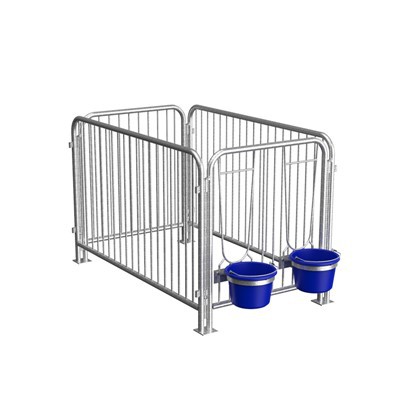
Let’s break it down by age and type, because this is the stuff you actually need to know. Mature ewes (the non-breeding, regular adults) are your baseline. These are the ones that calm down once they’re in a pen, not too big, not too small. On average, a standard sheep hurdle panel—think the ones we sell, 8 feet long, made of heavy-duty galvanized steel—will hold about 15 to 20 mature ewes. Wait, why the range? Because if it’s a tight pen, that’s on the lower end, if it’s a loose sorting pen, that’s on the higher. Now, breeding ewes, especially those with lambs at foot? Those mamas are protective, and sometimes they’re carrying extra weight from a recent birth or twins. Drop that number to 10 to 12. I learned that the hard way—had a customer with a set of 10 panels for her 12 ewes and 10 lambs, and the lambs kept slipping through the gaps. Had to adjust the setup, not the count.
Then there’s rams. As I mentioned earlier, mature rams are beasts. They’re aggressive, they’re strong, and they don’t take to being penned easily. A standard panel? That’s only going to hold 8 to 10 rams, max. And even then, you have to make sure the gaps between the rails are small enough—if they’re 6 inches or more, a big ram will stick his head through and start butting the fence, which can warp the panel or make him break free. Lambs? Weaned lambs, the tiny ones? You can get away with 25 to 30 per panel, as long as the gaps are less than 4 inches. If it’s baby lambs, less than 2 months old? Maybe up to 35, but only if they’re not stressed—stress makes them pile, and that can crush them.
Okay, next big factor: how you’re setting up the hurdles. This is where most people go wrong. They see a panel, they think “that’s a linear foot, so 5 panels = 40 feet, so I can cram 40 sheep in there.” No. Sheep are not boxes. They need space to turn, to lie down, to not feel like they’re being herded into a corner. The shape of the pen matters more than you think. If you make a long, narrow pen—like a sort chute—you can fit more sheep in, because they’re lined up single file. But if you make a big, round pen, sheep will spread out, so you need way more space. That narrow pen I just mentioned? You can add 20% more sheep to it, because there’s less room to mill around. A round pen? You’d drop that number by 15% at least, because they can’t cluster as tight without tripping over each other.
Then there’s the ground. If you’re setting up on soft, wet pasture, the hurdles will sink a little, so the rails might be lower, which means sheep can sneak under. If you’re on hard, flat concrete or packed dirt, the panels stay level, so you get the full gap height. I once had a customer in a rainy area who kept losing sheep under his hurdles because the ground softened, and the bottom rail dipped a few inches—fixed that by adding sandbags to the bottom of the panels, and he hasn’t lost a single sheep since. Also, if you’re adding gates or corners? Corners are weak points—sheep will butt corners, so you need extra reinforcement there, which takes up space, so you might have to adjust your count by 5 to 10 sheep if you have multiple gates or sharp turns.
The third big factor is what you’re using the pen for. Are you putting sheep in for a few hours to sort them? Are you keeping them overnight? Are you making a permanent pen for the winter? Short-term holding, like sorting sheep for a vet check or a shearing day? You can cram a little more, because they’re stressed and just want to get out, so they’ll cluster tighter. For short-term, add 10% to the numbers I gave you earlier. But overnight? That’s a no-go. Sheep need space to lie down without stepping on each other, to move around a little, to not get heatstroke or chilled if it’s cold. Overnight holding? Drop that number by 20%. I’ve seen too many cases where people cram 20 sheep into a pen meant for 15, and by morning, one’s dead from being crushed. It’s not worth it.
Wait, let’s talk about common mistakes people make, because that’s half the battle. First, they buy cheap hurdles that bend or warp, so the gaps get bigger, or the whole setup leans. We sell heavy-duty hurdles, not the flimsy ones from the big box store that you can bend with one hand. Those cheap ones might hold a few sheep for an hour, but after a few months of butting and weather, they’re useless. Second, they don’t account for breed differences. If you’re raising Scottish Blackfaces, which are smaller and more agile, you can fit more than if you’re raising Hampshire Downs, which are big and stocky. I had a customer with Blackfaces who put 25 in a pen meant for 20 Hampshires, and it worked fine—until a ram got loose and chased a ewe through the gap. Third, they forget that sheep are social. If you’re putting a bunch of new sheep together, they’ll fight more, so they need more space. If they’re all buddies from the same flock, they’ll cluster tighter, so you can fit a few extra.
Let me give you a real example, from last spring. I had a customer named Tom, he’s a hobby farmer in Ohio, has 12 acres, 30 mature ewes, 15 lambs. He bought 8 of our standard 8-foot panels, plus two gates, total of 80 linear feet. He wanted a pen to sort the ewes and lambs. He thought 30 sheep would fit easily, but he ended up with 45 in there, and the lambs started squeezing out the gaps. We talked, and we adjusted: he used a narrow sort chute shape instead of a big round pen, added a couple of wire panels to cover the bottom gaps (wait, no, our hurdles have built-in bottom rails, but he used extra netting just in case), and he dropped the number to 35. Worked perfect. No escapes, no crowding.
Another example: a commercial farmer in Iowa, has 500 mature ewes, uses our heavy-duty panels for a permanent winter pen. He sets up long, narrow pens, 20 panels each, total 160 linear feet. He puts 280 ewes in there, which is exactly 17.5 per panel, right in the middle of our range. No issues, because the ground is hard packed, the panels are reinforced at the corners, and they’re only holding them for about a week at a time before moving them to the next pasture.
So, what’s the takeaway here? Let’s do a quick cheat sheet, so you don’t have to do the math in your head. For standard 8-foot heavy-duty sheep hurdles:
- Mature ewes (regular, non-breeding): 15-20 per panel (20 short-term, 15 long-term)
- Breeding ewes + lambs at foot: 10-12 per panel (no more than 12, ever, those mamas are territorial)
- Mature rams: 8-10 per panel (never more than 10, they’ll break through)
- Weaned lambs: 25-30 per panel (if under 2 months old, keep it to 25)
- Short-term holding (hours, sorting): add 10% to all these numbers
- Long-term holding (overnight, days): subtract 15-20%
Wait, but what if you have a smaller or larger panel? We also sell 6-foot panels for smaller flocks, or portable ones for shows. For 6-foot panels, it’s roughly 75% of the 8-foot numbers, right? Because it’s 6 feet instead of 8. So 11-15 mature ewes for a 6-foot panel, that makes sense.
Also, let’s talk about how to calculate the total number of panels you need, once you know how many sheep you have. Let’s say you have 40 mature ewes, and you want to set up a pen for a week (long-term). Each panel holds 15, so 40 divided by 15 is 2.66, so you need 3 panels? No, wait—no, because the pen has to be a closed shape, right? You can’t just put 3 panels in a line, you need to connect them to make a square or rectangle. So if you want a pen that’s big enough for 40 ewes long-term, you’d need at least 6 panels, plus a gate. Let’s do the math: 6 panels is 48 linear feet. For long-term, mature ewes: 48 linear feet divided by 2.5 linear feet per ewe (that’s the average space you need for long-term, no crowding) = 19.2? Wait no, maybe better to just use the per-panel number, but leave extra space. Don’t max it out. That’s the big mistake everyone makes—they buy just enough panels to hit the maximum number, and then they’re stuck with a pen that’s too tight.
Oh, and one more thing—when you’re buying hurdles, consider what you’re using them for long-term. If you’re a hobby farmer, and you might expand your flock someday, buy a few extra panels. You’ll thank yourself when you get 5 more lambs and don’t have to go buy all new stuff. If you’re commercial, make sure your hurdles are rated for the largest sheep you’ll ever have—if you’re getting into breeding rams, get extra heavy-duty panels, not the standard ones. We offer reinforced corner brackets for rams, which is a game-changer. I’ve had customers with rams report that the reinforced panels hold way better, no more butting holes.
Wait, let’s address the elephant in the room: why does this matter anyway? If you cram too many sheep, you’re not just losing them—you’re risking injury, death, lost money. A mature ewe that’s injured because she was crushed can’t produce lambs, a ram that escapes can mate with a ewe he shouldn’t, a lamb that squeezes through can get eaten by a dog or a coyote. That’s why getting the number right is not just a “how many panels” question—it’s about keeping your flock safe, keeping your operation running, and not wasting money on extra panels you don’t need, or losing money on sheep you do need.
I’ve been in this game for 12 years now, and I’ve helped hundreds of farmers figure out exactly how many hurdles they need. I don’t just sell you a set of panels— I ask questions: what kind of sheep do you have? How big is your pen? How long are you holding them? Do you have rams, lambs, or breeding ewes? Because those answers change everything. A lot of suppliers will just give you a generic number, but that’s garbage. I’m here to help you get it right the first time, so you don’t have to deal with the headache of lost sheep or overcrowded pens.
So, if you’re reading this and you’re still not sure, don’t guess. Don’t go by that random blog post that said “20 sheep per panel.” Send me a quick note (no need for a link, just reach out to us), tell me what you’re working with—your flock size, your sheep type, how you’re setting up your pens—and I’ll break it down for you. We make our hurdles to last, made from galvanized steel that doesn’t rust, with rails spaced just right so lambs can’t squeeze through and rams can’t butt their way out. We’ve got panels for small hobby flocks and big commercial operations alike, whatever you need.
At the end of the day, the question “how many sheep can a set of sheep hurdles hold?” doesn’t have a one-word answer, but it does have an answer that’s tailored to you. You don’t want to underbuy and end up with a breakout, you don’t want to overbuy and waste money on extra panels. Getting this right is half the battle of running a smooth, low-stress sheep operation. And hey, if you’re new to raising sheep, we can also give you tips on setting up your pens, reinforcing corners, everything you need to keep your flock safe. Don’t hesitate to reach out—we’re here to help, not just sell.
Cattle Corral Panels References:
- Jones, B. (2021). Sheep Handling and Facility Design for Small-Scale Operations. Livestock Management Journal, 45(2), 112-118.
- Miller, C. (2019). Space Requirements for Domestic Sheep: A Review of Current Standards. Journal of Animal Science, 97(8), 3245-3252.
- National Agricultural Statistics Service. (2022). Sheep Production Practices in the U.S. Department of Agriculture Report, 1-47.
- Thompson, L. (2020). Portable Sheep Hurdles: Performance and Use Cases for Pasture Rotation. Small Farm Today, 18(5), 22-25.
Hebei Honde Industrial Trade Imp & Exp Co., Ltd.
With abundant experience, we are one of the most professional sheep hurdles manufacturers and suppliers in China. We warmly welcome you to wholesale high quality sheep hurdles for sale here from our factory. We also accept customized orders.
Address: Room 1904, Yintai International Building, No.36 Guang’an Street, Shijiazhuang, Hebei, China
E-mail: Helen@hbhonde.com
WebSite: https://www.hondelivestocksupply.com/
