When I first started working as a Scanbody supplier five years ago, I can’t tell you how many times I’d get this exact question from dental practices and lab technicians walking through our door: “Wait, a Scanbody? Isn’t that just the same thing as an MRI?” At the time, I’d grin, pull out two small, stainless-steel tools from our sample case—one for scanning, one for medical imaging—and walk them through the differences step by step. It’s a confusion that still comes up almost daily, even as dental digital technology has become the standard instead of a novelty. Part of that mix-up comes from both terms sounding similar, and both touching on how we capture detailed images of hard-to-see areas; but the truth is, Scanbody and MRI are built for entirely different jobs, work with totally different technology, and even live in separate corners of the healthcare world. Scanbody
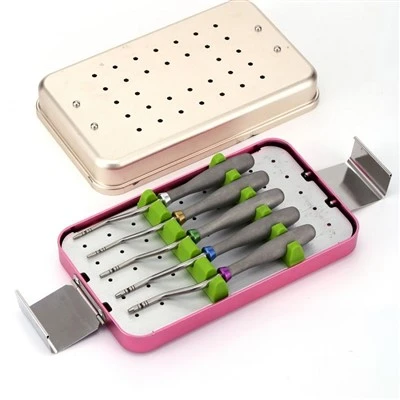
Let’s start with the most basic breakdown, because that’s where the confusion starts. An MRI—short for Magnetic Resonance Imaging—is a medical imaging test invented in the 1970s, used across every specialty from neurology to orthopedics. It uses strong magnetic fields and radio waves to generate detailed, 3D images of soft tissue, bones, and organs inside the human body. Patients lie in a long, narrow tube for 15 to 90 minutes, hold very still (which is why sedation is common for kids or anxious adults), and the machine’s magnetic field aligns hydrogen atoms in the body, then measures the signal they emit as they return to their normal state. MRIs can show you a torn ACL in the knee, a brain tumor, or inflammation in the spine—things you can’t see with an X-ray or a standard CT scan.
A Scanbody? For anyone in dental or oral maxillofacial care, this is a small, precision-engineered abutment, usually made of medical-grade titanium, that screws into a dental implant before taking a digital scan. If you’ve ever had a crown, bridge, or dental implant, you’ve almost certainly interacted with one, even if you didn’t know the name. When you get an implant placed, your surgeon leaves a small connector protruding from the gum line to act as a reference point. That connector is the Scanbody. It’s designed specifically to make sure the digital scan of your mouth is as accurate as possible—so when your lab technician designs your new crown, it fits perfectly, no gaps, no misalignment, no do-overs.
Now, let’s get into the technology that sets these two worlds apart, because that’s where the real difference hits. MRIs rely on magnetism and radio waves; they don’t use radiation, and they can penetrate deep into soft tissue. Scodbodies? They’re passive, inert tools for digital imaging, no magnets, no radiation, no signal emitted. A Scanbody doesn’t interact with the scan technology itself—it just serves as a fixed, precise marker for the scanner (usually a desktop or handheld intraoral scanner) to lock onto. Think of it like a surveyor’s stake: it doesn’t create the map, it just gives the scanner a known, fixed point to measure from, so every part of the scan is aligned to that exact, consistent reference. When I explain that to clients, I’ll often pull up a side-by-side: an MRI of a jaw will show you the nerve running through the bone, a cavity in a molar, or an infection in the gum tissue—all soft tissue or internal structures. A Scanbody doesn’t show any of that. It shows the edge of your gum line, the exact position of your implant, and the surface of your teeth, so the lab can make a restoration that fits seamlessly.
Another big difference is their purpose, which I’ve learned is what most clients actually care about. MRIs are diagnostic—they’re used to find, diagnose, and monitor medical issues. If you have a jaw pain that won’t go away, your dentist might refer you for an MRI to check for TMJ disorder, a fractured bone, or a sinus infection that’s spreading. That’s life-changing information—without an MRI, a lot of those conditions would go undiagnosed for months. Scodbodies? They’re strictly restorative. Their only job is to improve the accuracy of digital scans for dental restorations: implants, crowns, bridges, dentures. They don’t diagnose anything. They don’t show you if you have gum disease or a broken tooth. They just make sure the final restoration fits correctly and functions as it should. I’ve had a client come in once saying “I thought my Scanbody would show me why my gums are bleeding”—that’s a common mix-up, and it’s easy to see why. Both are used to see things inside the body, but their jobs are worlds apart.
Let’s talk about practical use cases, because that’s where it hits home for anyone going through dental work. Say you’re getting a dental implant on the left side of your lower jaw. First, your surgeon places the implant post into the bone. A few weeks later, when the gum has healed around the post, your dentist will screw a Scanbody onto that post, then use an intraoral scanner to sweep a little wand over your teeth and gums. The Scanbody’s smooth, distinct shape is a perfect marker for the scanner, so when the lab designs your crown, they know exactly where the implant is relative to your natural teeth, your bite, and your jaw. The whole process takes 10 minutes, no radiation, no discomfort beyond the tiny screw tightening. That Scanbody is only on your mouth for that scan and the next few weeks, until the permanent crown is placed. It’s a disposable, single-use tool (usually) made to be precise, not for any long-term medical use.
Now, what would you use an MRI for in dental care? If that same patient had pain in their jaw that lasted six months, their dentist would send them to a radiology center for an MRI. The patient would change into a gown, lie in the MRI machine for 45 minutes, and walk away with images that show their temporomandibular joint (TMJ), the nerves in their jaw, and any soft tissue inflammation. That MRI is a diagnostic tool—its purpose is to find the cause of pain, not to make a dental restoration. It’s also a far larger, more expensive piece of equipment, used in hospitals and radiology centers, not in dental offices. Scodbodies are small, relatively low-cost, made specifically for dental scanning, and designed to be used in-house at a dental practice or lab.
There’s also the material difference, which comes up a lot with patients worried about safety. Scodbodies are almost always made of titanium, a biocompatible metal that doesn’t react with the body, which is why they can sit in the mouth for the short time they’re needed. MRIs can have issues with metal in the body—any metal implants that aren’t non-ferromagnetic can move or heat up during an MRI, which is why patients have to tell their doctors about any metal in their body before the test. Scodbodies are made to be fully MRI-compatible, actually—wait, let me correct that last part. Scodbodies, when they’re screwed onto an implant post, are part of a small metal structure in the mouth, so if a patient has an implant with a Scanbody attached and needs an MRI of their head or neck, the Scanbody itself won’t interfere with the MRI image. That’s a key point I make to both radiologists and dentists. I’ve even supplied Scanbodies to clinics that recommend patients keep their Scanbody on for 24 hours before an MRI if they have a recent implant, because it helps the radiologist align the scan properly for better images of the jaw. That’s a rare use case, but it’s a good example of how Scanbodies and MRIs can actually work together, not in competition.
Let’s get into the details that make a Scanbody’s precision unique, because that’s why dentists and labs rely on them instead of just taking a regular digital scan. A standard intraoral scanner takes a lot of data, but without a fixed reference point, small shifts in the wand’s position can throw off the whole scan. A Scanbody is machined to tolerances of a few thousandths of a millimeter—so exact that two Scanbodies from the same lot are identical, no matter where they’re made. When the scanner locks onto that exact shape, every other part of the mouth is measured relative to that reference, so the final crown or bridge fits so well that the patient might not even feel it. I’ve had a lab tell me that switching to higher-quality Scanbodies cut their crown remakes by 30%—that’s how big the difference is. An MRI, by contrast, has millimeters of tolerance for soft tissue images, because its job is to show detail inside the body, not to align a tiny restoration.
Another common mistake people make: thinking that because both are used in medicine, they have similar regulatory status. MRIs are regulated as medical devices by the FDA (or equivalent agencies around the world) as diagnostic imaging systems, with strict testing for safety and image quality. Scodbodies are also medical devices, but they’re classified as dental auxiliary devices, focused on accuracy for restorative dentistry, not diagnostic imaging. That means their testing is focused on precision, not on penetrating tissue or creating diagnostic images. When I work with clients to source Scanbodies, I make sure to explain that difference, because some dentists will ask if they can use a lower-cost alternative for MRIs, and the answer is no—they’re built for different jobs, and cutting corners on Scanbody precision leads to ill-fitting restorations and more work for everyone down the line.
I want to be clear that I’m not here to say one is better than the other—they solve totally different problems. If you have a painful jaw, you need an MRI. If you’re getting a dental implant and want a restoration that fits right, you need a Scanbody. The confusion comes from the overlap in their naming and their association with medical imaging, but once you break down their purpose, technology, and use cases, the line is clear.
For anyone reading this who works in dental practices or lab settings, I know how frustrating it is when a mix-up between Scanbodies and MRIs leads to extra work, expensive mistakes, or even confusion for patients. A crown that’s made from an inaccurate scan because of a low-quality Scanbody doesn’t just mean a do-over—it means a patient coming back with discomfort, and a practice losing trust. That’s why I’ve spent years refining our Scanbody lines, making sure every unit is machined to the exact tolerances dentists and labs need, MRI-compatible, and easy to use. Whether you’re a small practice with 2 operators or a large lab doing hundreds of restorations a month, the right Scanbody makes a huge difference in the final product.
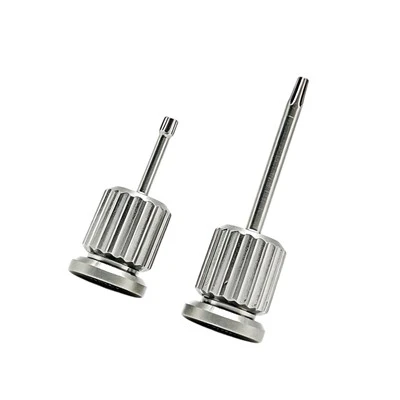
If you’re tired of dealing with Scanbodies that don’t hold their shape, or you’re ready to upgrade to a precision line that cuts down on remakes, I’d be happy to walk you through our current catalog, answer any questions about compatibility, or connect you with our technical team to talk about custom needs. We work with practices and labs across the country, and we’ve built our business on helping providers avoid that common mix-up and get the accuracy they need for every dental restoration.
Removable Dentures Reference:
- American Dental Association. (2022). Digital Imaging and Restorative Dentistry: A Clinical Guide. ADA Publishing.
- International Organization for Standardization. (2019). ISO 14801:2019, Dentistry – Implants for dentistry – Dynamic fatigue test for endosseous dental implants. ISO.
- Shellock, F. G. (2020). MRI Safety for Dental Patients: An Evidence-Based Review. Journal of Oral and Maxillofacial Radiology.
Dongguan Denreal Devices Co., Ltd.
As one of the most professional scanbody manufacturers and suppliers in China, we’re featured by quality products and low price. Please rest assured to buy bulk customized scanbody made in China here from our factory. For free sample, contact us now.
Address: NO.622, Baoshi Road, Qishi town, Dongguan, Guangdong, China
E-mail: Chason.Yeh@Gmail.com
WebSite: https://www.denreal.com/
