Alright, folks! As a long – time supplier in the forging processing business, I’m super stoked to spill the beans about what the heat treatment process after forging processing is. Forging Processing

Let’s start from the very beginning. Forging is like a magical dance where metal gets shaped under high pressure. You take this raw, tough piece of metal, heat it up to a point where it gets malleable, and then use some serious force to mold it into the shape you need. But here’s the thing: after forging, the metal’s structure is all wonky. It’s got internal stresses, and its mechanical properties might not be up to par. That’s where heat treatment steps in as the hero of the story.
The first major goal of heat treatment after forging is to relieve those internal stresses. When you forge the metal, you’re basically pushing and pulling its atoms around. This creates a whole bunch of stress within the metal. If you don’t relieve these stresses, it can lead to all sorts of problems down the line. For example, the metal might crack or deform when you try to machine it further or when it’s in use.
One common heat – treatment method to relieve stress is annealing. Annealing is like giving the metal a nice, long nap. You heat the forged metal up to a specific temperature, hold it there for a while, and then cool it down very slowly. This slow cooling allows the atoms in the metal to rearrange themselves in a more relaxed and stress – free way.
There are different types of annealing, too. Full annealing is used when you want to get the metal to its softest state. This is great if you need to do a lot of machining on the metal later because a softer metal is easier to cut, drill, and shape. You heat the metal above its upper critical temperature, keep it there for a bit, and then let it cool in the furnace. It’s a bit of a time – consuming process, but it really does the job.
Another type is process annealing. This is more of a quick fix. You heat the metal to a lower temperature, just enough to relieve some of the stress without changing its hardness too much. It’s often used in between different forging or machining operations.
Now, let’s talk about hardening. Sometimes, you don’t want a soft metal. You want it to be tough as nails, able to withstand a lot of wear and tear. That’s where hardening comes in. After forging, you can heat the metal to a high temperature, usually above its upper critical temperature. Then, you quench it. Quenching means you cool the metal down really fast, like dunking it in water, oil, or a special quenching medium.
This rapid cooling traps the atoms in a new, more rigid structure, making the metal harder. But there’s a catch. Quenching can also make the metal brittle. So, right after hardening, you usually need to do another heat – treatment step called tempering.
Tempering is like finding a balance. You heat the hardened metal to a moderate temperature, below its lower critical temperature, and then let it cool. This reduces the brittleness while still keeping the metal hard. The exact temperature and time for tempering depend on what you’re using the metal for. If you need a metal that’s really tough but not too brittle for things like gears or shafts, you’ll choose a different tempering process compared to if you’re making a cutting tool that needs to be super hard.
Normalizing is another heat – treatment process we often use. It’s a bit like annealing, but with a faster cooling rate. You heat the forged metal to a temperature above its upper critical temperature and then let it cool in still air. Normalizing refines the grain structure of the metal, making it more uniform. A more uniform grain structure means better mechanical properties, like improved strength and toughness. It’s also a good way to prepare the metal for further heat treatment or machining.
So, why is all this heat – treatment stuff so important for us forging suppliers? Well, for starters, it ensures that the products we make meet the high – quality standards our customers expect. If we sell a forged part that hasn’t been properly heat – treated, it could fail in use. And that’s not just bad for our customers; it’s bad for our reputation.
For example, imagine we’re making engine parts. If the parts aren’t correctly heat – treated, they might warp or crack under the high stresses and temperatures inside an engine. That could lead to engine failure, which is a huge headache for the vehicle owner.
Also, heat treatment allows us to customize the properties of the forged parts. Different applications need different mechanical properties. By using the right heat – treatment process, we can make a part that’s soft and easy to machine for one customer, and then make a super – hard and tough part for another customer.
Now, let’s talk about how we actually go about doing these heat – treatment processes. We’ve got some pretty high – tech equipment in our shop. We use industrial furnaces to heat the forged parts to the right temperatures. These furnaces are carefully controlled so that we can get the exact temperature we need for each specific heat – treatment process.
For quenching, we have different tanks filled with water, oil, or other quenching media. We have to be really careful when quenching because the wrong quenching medium or the wrong cooling rate can mess up the whole process. We also have to make sure the parts are evenly cooled to avoid cracking or warping.
When it comes to tempering and normalizing, we again use the furnaces to heat the parts to the correct temperatures and then monitor the cooling process. We’ve got a team of experienced technicians who know how to operate this equipment and make sure everything runs smoothly.
By now, you’re probably getting a better idea of how important the heat – treatment process after forging processing is. It’s not just an extra step; it’s a crucial part of making high – quality forged products.
If you’re in the market for forged parts, whether it’s for automotive, aerospace, or any other industry, you want to work with a supplier who knows their stuff when it comes to heat treatment. And that’s where we come in. We’ve been in the forging business for a long time, and we’ve got the skills, the experience, and the equipment to provide you with top – notch forged parts that have been properly heat – treated.
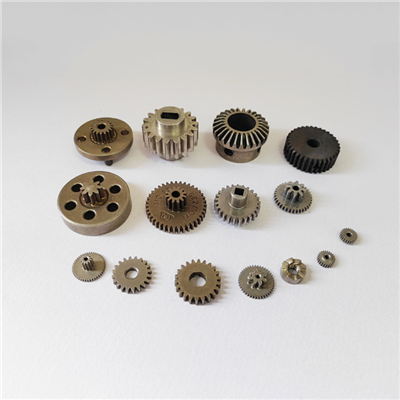
So, if you’re interested in discussing your forging needs and how we can use the right heat – treatment processes to meet them, don’t hesitate to reach out. We’re always open to having a chat and seeing how we can help you get the best – quality forged products for your specific applications.
Precision Machined Parts References:
- "Metallurgy for Dummies" by Corby Anderson
- "Fundamentals of Heat Treatment of Steels" by George Krauss
Taizhou Liuhuan Machinery Co., Ltd.
As one of the most professional forging processing manufacturers and suppliers in China, we’re featured by quality products and good service. Please rest assured to buy customized forging processing made in China here from our factory. For quotation, contact us now.
Address: Xinyuan Industrial Zone, Damaiyu Street, Yuhuan City, Zhejiang Province,China
E-mail: tzlhmachining@gmail.com
WebSite: https://www.tzlhmachining.com/
